
A fish mortality in a fishing pond, an algal bloom in a bathing lake, or a river or lake whose water quality fluctuates without anyone noticing: such changes often occur precisely between two scheduled monitoring checks.
Individual water samples are often taken only at certain intervals and therefore always provide a snapshot of conditions at the time of sampling. Sampling and analysis can be time-consuming and may require specially trained personnel. In the case of laboratory analyses, results are often not available until some time later.
Continuous sensors can close this gap, but they bring other challenges: over time, biofouling can develop on the sensing surfaces and affect the measured values. Depending on the measurement principle, sensitive components may age, or regular calibration and, where necessary, adjustment may be required. With some systems, this means removing and shipping the sensor or carrying out complex work directly in the field, sometimes at short maintenance intervals.
The challenge becomes particularly significant when numerous monitoring sites are spread across a wide area, staff resources are limited, and responsibilities are divided among different teams or organizations.
Live Data from a Pond
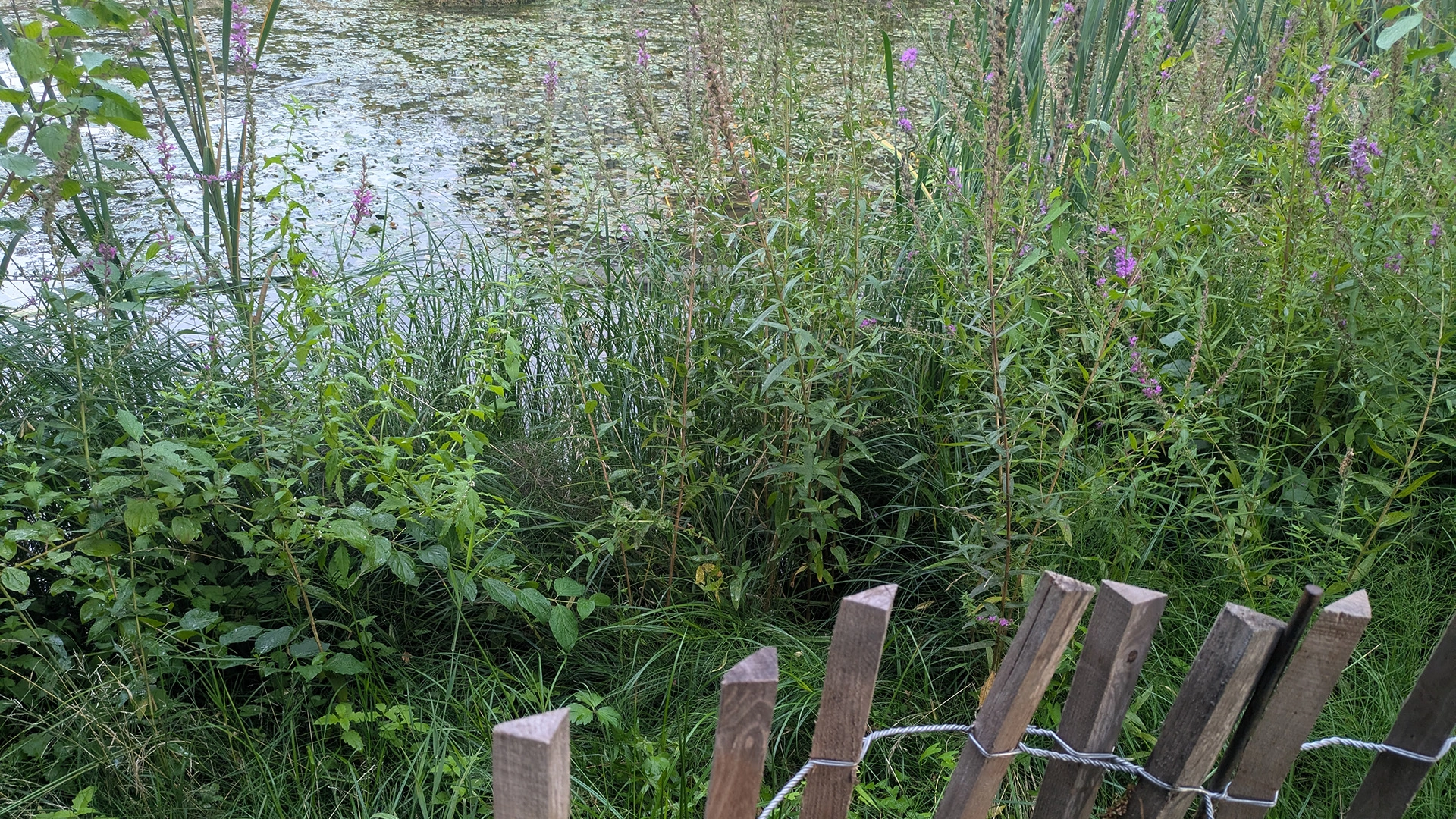
The live demo shows measurement data from a very small pond at the 2026 State Garden Show in Ellwangen, Baden-Württemberg, Germany. Two aDO sensors continuously measure dissolved oxygen at different water depths. The measurement data is transmitted to a cloud platform, which you are currently viewing live.
Oxygen concentrations in small, stagnant water bodies can fluctuate considerably. Factors include the time of day, temperature, algae and plant growth, organic load, wind, water mixing, and fish stocking.
Strong fluctuations from close to 0 mg/L to very high values of around 35–40 mg/L in extreme cases are therefore generally plausible and are not automatically the result of a measurement error.